AI
Attention Span Is All You Need
Coding got commoditized. The new skill is conducting agents like an OS schedules threads.
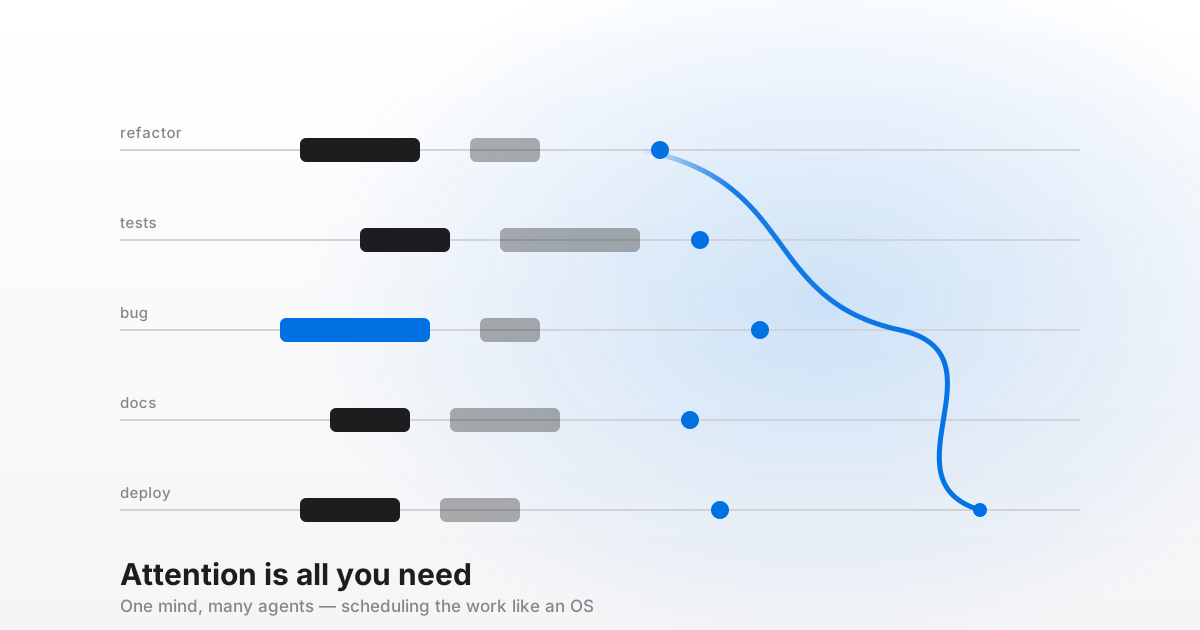
Before AI, coding was a solo act. Head down, headphones on, one task, one mind. The world rewarded depth in a single thread — the engineer who could disappear into a problem for six hours and come back with something that worked. Focus was the whole game.
That world is gone. Coding itself has been commoditized. The model writes the function, the test, the boilerplate, sometimes the whole feature. What used to be the hard part is now the cheap part. So the question changes: if anyone can generate code, what actually separates you?
It's how many agents you can run at once.
Think of a magician conducting an orchestra. Each agent is an instrument — one refactoring, one writing tests, one chasing a bug, one drafting docs. Alone, each is just noise. Your job is to keep them all playing in time, switching between them fast, holding the context of each in your head without dropping the thread. The bottleneck isn't intelligence anymore. It's attention. How quickly can you load a context, make a call, and move to the next one?
It's a lot like an operating system. A CPU has limited cores, but it juggles hundreds of threads by scheduling them well — a priority queue, fast context switches, knowing which process to wake and which to let wait. That's the skill to build now. Which agent needs you right now, which one can run in the background, which one is blocked and waiting on input? Become a better scheduler and you can run far more than you think.
My own setup got simpler as this clicked. I don't use an IDE anymore. It's mostly the terminal now — even on my Mac, I just open a terminal and that's it. A browser for the internet, and I'll probably automate that too when I get the time. The heavy tooling melts away once your real job is orchestration, not typing.
My time managing a team — stakeholder management, one-on-ones, unblocking junior engineers who needed a nudge in the right direction — felt at the time like a detour from "real" technical work. It turns out it was training. These agents are my new reports: early-career talent, fast and capable, but they need direction. Vague instructions get vague results. But get the prompt right — frame the problem, set the constraints, hand them the context — and they don't need hand-holding at all. They just deliver magic.
The person who ships the most today isn't the best coder. It's the best conductor — the one who can hold ten threads at once and make them sound like one song.